
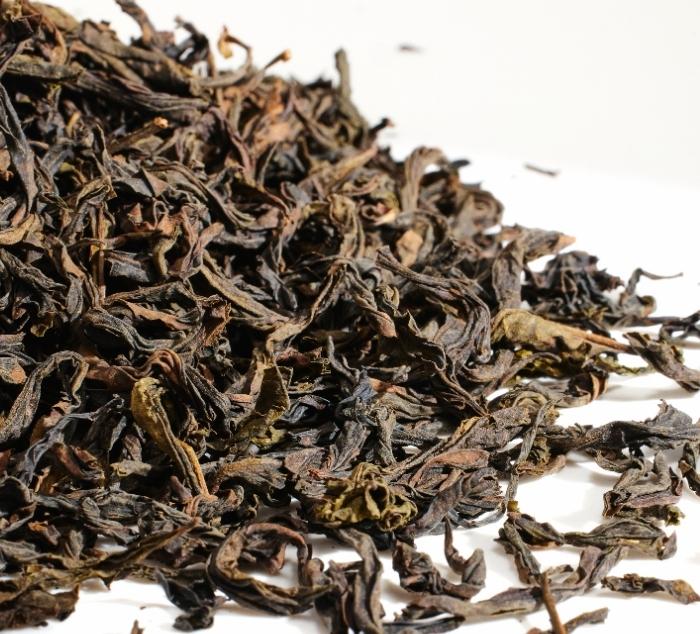


Da Hong Pao (Big Red Robe) Oolong
Flavor:
Roasted almonds, dark chocolate, honey, caramelized sugar, stone fruit, mineral warmth
Health Benefits:
Antioxidant Rich: Oolong tea is packed with polyphenols that help protect the body against oxidative stress and support overall health.*
Energy and Focus: Da Hong Pao contains moderate caffeine balanced by L-Theanine, offering calm, sustained mental clarity without overstimulation. A wonderful alternative to your morning coffee.*
Digestive Support: Oolong tea has long been valued as a digestive aid, making Da Hong Pao a natural choice after meals, particularly after rich or heavy food.*
Heart Health: Regular consumption of quality oolong tea may support healthy circulation and cardiovascular function.*
Metabolism Support: Oolong tea is widely associated with supporting a healthy metabolism and sustained energy levels throughout the day.*
*These statements have not been evaluated by the Food and Drug Administration. This product is not intended to diagnose, treat, cure, or prevent any disease. Always consult with your healthcare practitioner before adding new products to your diet, especially if you have any existing health conditions or are taking medication.

Our tea sachets are made using NeoSoilon®, a non-GMO material derived from sugarcane. They are not made from petroleum-based plastics.
Shipping Information:
- Gold Tier Loyalty Members: enjoy FREE shipping on every order (excluding subscriptions)!
- Free Shipping: for all other customers, enjoy FREE shipping on orders $60 or more within the lower 48 states.
- Flat Rate Shipping: A flat rate of $5.99 applies to orders below $60 within the lower 48 states.
- Special Locations: Shipments to Alaska, Hawaii, Puerto Rico, and Guam now enjoy FREE Shipping on orders over $100.
- Processing Time: Orders are shipped from our warehouse within 1-4 business days, Monday–Friday, after payment and delivery address verification.
Returns Policy:
- Tea Products: Tea cannot be returned as it is a food product. We recommend trying smaller sample sizes to ensure satisfaction before committing to larger bulk sizes.
- Steepware Returns: For unopened/unused Steepware, we offer store credit (minus the cost of return shipping) within 30 days of your delivery date.
- Incorrect or Damaged Items: If you received an incorrect or damaged item, please contact us via call or email within 30 days of your delivery date, and we will rectify the problem immediately!

Tasting Notes:
From the rocky cliffs of Fujian Province comes China's most legendary rock oolong. Da Hong Pao, meaning "Big Red Robe," is the crown jewel of yancha, or rock tea, a style defined by the rugged volcanic terroir it grows in and the unmistakable mineral depth it carries in every cup. Handcrafted in small batches by tea master Peng Jinqin, a National Level 1 Tea Processor and Appraiser, this is a great tea with centuries of heritage behind it and real artistry in every step of its making.
The cup opens with aromas of roasted almonds, cocoa husk, and baked fruit. On the palate you get rich notes of dark chocolate, honey, and caramelized sugar, with a faint wisp of smoke and a stone fruit sweetness that surfaces as it cools. The finish is long, resonant, and warm, a soft lingering sweetness that stays with you.
Peng Jinqin's Da Hong Pao took the Special Prize at the 2023 Wuyishan Spring Tea Appraisal Competition and the Silver Award at the Zhenxing Cup Rock Tea Competition.

Features:
-
Origin: Wuyi Mountains, Fujian Province, China
-
Cultivar: Dahongpao
-
Style: Rock Oolong (Yancha)
-
Caffeine: Medium-High
- Lifestyle-Friendly: Vegan, Paleo, Keto
Ingredients: oolong tea
What Is Da Hong Pao?
Da Hong Pao is a rock oolong, or yancha, from the Wuyi Mountains of Fujian, China. Unlike green tea or black tea, oolong tea is partially oxidized, placing it somewhere between the two in terms of flavor and caffeine. Da Hong Pao sits at the medium-high end of the oxidation spectrum and is finished with a charcoal roast that gives it its signature depth and warmth. It is one of the most flavorful and celebrated teas in the world, and has been for centuries.
The name itself comes from a legend long ago: a scholar on his way to imperial exams fell ill on the mountain path. A monk from Tianxin Temple revived him with tea from four bushes growing in the cliff rock. The scholar went on to pass his exams and returned to drape his red robe over the bushes in gratitude. Those mother plants, still growing today on Wuyi's Nine Dragon Nest cliff, are considered national treasures of China.
The Terroir: Why Wuyi Mountain Produces the World's Best Rock Oolong
There are teas you drink and teas you study. Da Hong Pao is both, and the Wuyi Mountain region of northern Fujian Province is the reason why.
Rising from river gorges and volcanic cliffs between 200 and 800 meters, this UNESCO World Heritage landscape produces some of the most complex and sought-after teas in the world. The porous red and gray sandstone stores minerals deep in the rock, and the tea bush roots draw from that mineral wealth over decades of slow growth. Mild temperatures, diffused sunlight, and misty air currents create conditions that concentrate flavor in ways that teas grown on flat terrain simply cannot replicate.
The result is what Chinese tea culture calls "yan yun," or "rock rhyme," the distinctive mineral resonance that runs through every sip of a true Wuyi oolong. It is geological as much as agricultural, and you can taste the mountain in every cup.
The Mother Plants and the Cultivar
Our Da Hong Pao is crafted from cultivars descended from the area's original mother plants, protected for centuries as national treasures and still considered the gold standard of the style. These are not the same leaves you find in a mass-produced blend or a tea bag. The tea bushes here are mature, deep-rooted, and shaped by generations of careful tending in one of the most distinctive growing environments on earth. That origin shows up directly in the body, aroma, and finish of what ends up in your cup.
How It's Made: Small Batch, Charcoal Roasted
The making of Da Hong Pao is where craft meets geology. The tea leaves are plucked from mature shrubs rooted deep in mineral-rich rock crevices, withered in open air, and then oxidized to a medium-high degree before the roasting begins.
The roasting is where tea master Peng Jinqin's skill shows most clearly. The leaves are roasted repeatedly over charcoal in small bamboo baskets, each round building complexity and smoothing the tea's natural strength. It is slow, precise work that requires both deep knowledge and an attentive hand. The result is a dark, twisted loose leaf with a glowing red-bronze liquor that opens up differently with every steep.
This is a tea that rewards a second steep, a third steep, and beyond. Each infusion reveals something slightly different, which is part of what makes Da Hong Pao so delicious and so endlessly interesting to drink.
The Tea Master
Da Hong Pao at this level does not happen without the right hands behind it. Peng Jinqin is a National Level 1 Tea Processor and Appraiser, one of the highest credentials in Chinese tea, and his work in the Wuyi Mountains has earned recognition at the highest levels of the industry. His Special Prize at the 2023 Wuyishan Spring Tea Appraisal Competition and Silver Award at the Zhenxing Cup Rock Tea Competition reflect decades of precision and a deep understanding of what makes Wuyi rock oolong exceptional.
When you brew this tea, you are tasting that expertise in every cup.
How to Brew Da Hong Pao
Da Hong Pao rewards attentive brewing. Use 5 grams of loose leaf per 150ml of hot water at 205°F. Steep for 30 seconds for the first infusion and add 10 to 15 seconds for each subsequent steep. This tea is well suited to gongfu style brewing in a small teapot or gaiwan, and the same leaves will give you multiple rich, flavorful infusions, each one revealing something slightly different.
Steeping time matters here. Too short and you miss the depth. Too long and the roast can overpower the stone fruit and caramel notes that make this tea so special. 30 seconds is your starting point, and you can adjust from there to suit your taste.
Da Hong Pao is wonderful in the morning as a rich, smooth alternative to coffee, but it is equally at home on special occasions when you want a tea that genuinely impresses. Unlike teas that turn bitter when brewed strong, Da Hong Pao stays smooth and deep across multiple steeps, making it one of the most rewarding loose leaf oolongs you can brew at home.
sip with purpose:


